Anúncios
If you are reading this on adcod.com, you already understand that in the fast-moving world of technology every second counts. When your system is sluggish at boot, it sets the tone for the rest of your computing session. As a copywriter with over 20 years in the tech niche, I’ll walk you through actionable techniques to significantly accelerate boot times on Windows 10 and Windows 11. These aren’t vague suggestions—they are best practices rooted in real-world experience and current OS behaviour.
Why Boot Time Matters

Boot time affects your productivity from the very moment you press the power button. If Windows takes too long to load you lose time, momentum, and sometimes patience. A faster boot means: faster access, smoother workflow, fewer interruptions, and a more professional feel. On top of that, longer boot times often point to hidden inefficiencies—software bloat, outdated drivers, or suboptimal hardware. Tackling boot speed improves the overall health of your machine.
Anúncios
1. Verify Your Storage Drive Type
Start by checking whether your system drive is a traditional hard disk drive (HDD) or a solid-state drive (SSD). Boot times on a HDD routinely lag behind those on SSDs. On the forum TenForums users report that “boot times in minutes is typically a characteristic of a HDD”. If you’re still on an HDD, consider upgrading to an SSD or NVMe drive—this hardware step alone often yields the largest improvement.
Also read: Fix Physical Memory Dump Error on Windows
Anúncios
2. Enable Fast Startup in Windows

Both Windows 10 and Windows 11 include a built-in “Fast Startup” mode that combines hibernation and shutdown to reduce boot time. To enable:
-
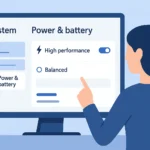
Press Start → Settings → System → Power & sleep → Additional power settings.
-
Click “Choose what the power button does” → “Change settings that are currently unavailable” → Check “Turn on fast startup (recommended)”.
-
Save changes and reboot.
This feature can reduce the time from power-on to desktop significantly. It’s a simple toggle, but it often gets overlooked.
3. Review and Reduce Startup Applications
One of the most effective software-based optimisations is disabling unnecessary startup programs. Open Task Manager (Ctrl + Shift + Esc) → Startup tab. Sort by “Startup impact” and disable any apps you do not need at boot. This tip is endorsed by multiple sources.
Users on Reddit found:
“The tip that was most efficient … was Uninstall apps you don’t need … disabling automatically starting programs … boot time dropped from 39 seconds to 34 seconds.”
So auditing startup programs is high on the priority list.
4. Clean Up Temporary Files and Unused Programs

Over time your system accumulates temporary files, large caches, unused apps and features. Use Disk Cleanup (%windir%\system32\cleanmgr.exe) or a trusted third-party tool to remove these. The TenForums thread also notes that cleaning up helped users reduce boot time.
Additionally uninstall programs you no longer use: fewer background services = fewer delays at boot.
Also read: WMI Provider Host High CPU Usage (how to diagnose and fix)
5. Disable Unneeded Windows Features and Animations
Windows ships with many background services and visual animations that slow startup. According to a user-test write-up:
“Disable Windows features you don’t need … external apps … animations …”
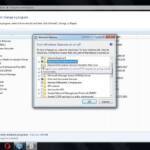
Go to Control Panel → Programs → Turn Windows features on or off → uncheck items you don’t use (for example, Internet Explorer 11, Legacy components). Also in System → Advanced system settings → Performance Settings → Visual Effects, you can select “Adjust for best performance” to reduce animation overhead.
6. Update Drivers, Firmware and BIOS
Outdated drivers or firmware can introduce delays during boot, especially when the hardware waits or mis-communicates. For example, on Reddit:
“First thing … update to the newest bios. AM5 bios updates drastically improved boot times.”
Check your motherboard manufacturer’s site, storage controller drivers, chipset drivers. A modern BIOS with “Fast Boot” or “Ultra Fast Boot” enabled can bypass unnecessary POST checks and expedite startup.
7. Check Health of Your Disk and File System
If your drive has bad sectors, corrupted system files or needs repair, boot performance suffers. Use CMD as administrator and run:
These commands will identify and repair file system issues. The TenForums thread specifically recommends that approach. s
After repair, reboot and check whether boot time improves.
8. Optimize BIOS Boot Order and Settings
In BIOS/UEFI settings you can streamline which drives are checked first and reduce delays:
-
Set your main Windows drive as first boot device.
-
Disable drives that are not used for boot.
-
Enable “Fast Boot” or “Quick Boot” in UEFI.
-
On newer boards, enable memory context restore or “memory training retention” so RAM boot sequences are faster.
By removing unnecessary devices from boot order and letting the board skip long hardware checks, you shave off precious seconds.
9. Use an SSD or High-Performance NVMe Drive
As mentioned earlier, storage type is one of the biggest factors. Upgrading from HDD to SSD or NVMe will typically cut boot times by a large margin. The video “BOOT Windows 11 300% Faster” by Crown GEEK confirms that storage upgrade is a cornerstone of speed optimisation.
If you already have SSD, make sure it has plenty of free space (10-20 %) because SSDs perform slower when nearly full.
10. Monitor and Analyse Boot Performance (Advanced)
For power users: use tools like Windows Performance Recorder (WPR) and Windows Performance Analyzer (WPA) to trace what happens during boot. According to TenForums:
“Better to get a proper analysis …”
Look for driver delays, service timeouts or “Waiting on…” events. If a particular service consistently causes delay you may disable or update that service/driver.
Bringing It All Together
Start with the easiest steps: enable fast startup, disable startup apps, clean up files. If you still have slow boot times, move into firmware/BIOS settings, update drivers/firmware, and consider hardware upgrades (SSD/NVMe). For most users, implementing just 3-4 of the above will drastically improve startup experience.
Remember: boot optimisation is both software and hardware domain. Ignoring one half means you’ll only partially reap benefits. If you’re running on older hardware, an SSD upgrade may provide the biggest single improvement — but even on newer systems, firmware and startup apps still matter.
Also read: How to Reset an Administrator Password Using CMD on Windows 11